Finding coherence while photographing whatever the road puts in front of you.
In recent weeks, I seem to have been churning out a stream of articles on subjects I know little about, posing a great many questions that my work predictably fails to answer.
In truth, I have merely hidden another of my many unanswerable questions behind a seemingly completed product. This digital zine is my attempt to tackle one of the more practical problems of Thunderbolts: how do you make a coherent photographic project out of the many and varied subject matter that happen to occupy the same 300-kilometre stretch of country?
I’ve previously attempted to address the difficulty of colour grading in a faithful, honest and authentic manner, while still allowing the project to be coherent and pleasing to look at.
Now I am wrangling something even more fundamental, and something that has been a lifelong plague on my practice.
What genre is this?
I have never really been able to answer that question with my work.
Those familiar with my musical background (the subject of my degree) will recognise that I have always had very specific interest in a broad and wild variety of music; classical orchestral works, Lied, jazz, swing, reggae, ska, punk, metal, rap and electronic music are all “my thing”. Music has a wonderfully elaborate system of genres, subgenres and fusions, and I am happy to move freely between them. I can perform in the orchestra of a Romantic French symphony, then sing along to The Specials for the drive home, without feeling like a sell-out to either of them.
Photography has always been the same. I envision projects as needing what they need, and being what they will be. But where I’m happy to pick out genre labels in music, I’ve never really been truly aligned with any of them in photography.
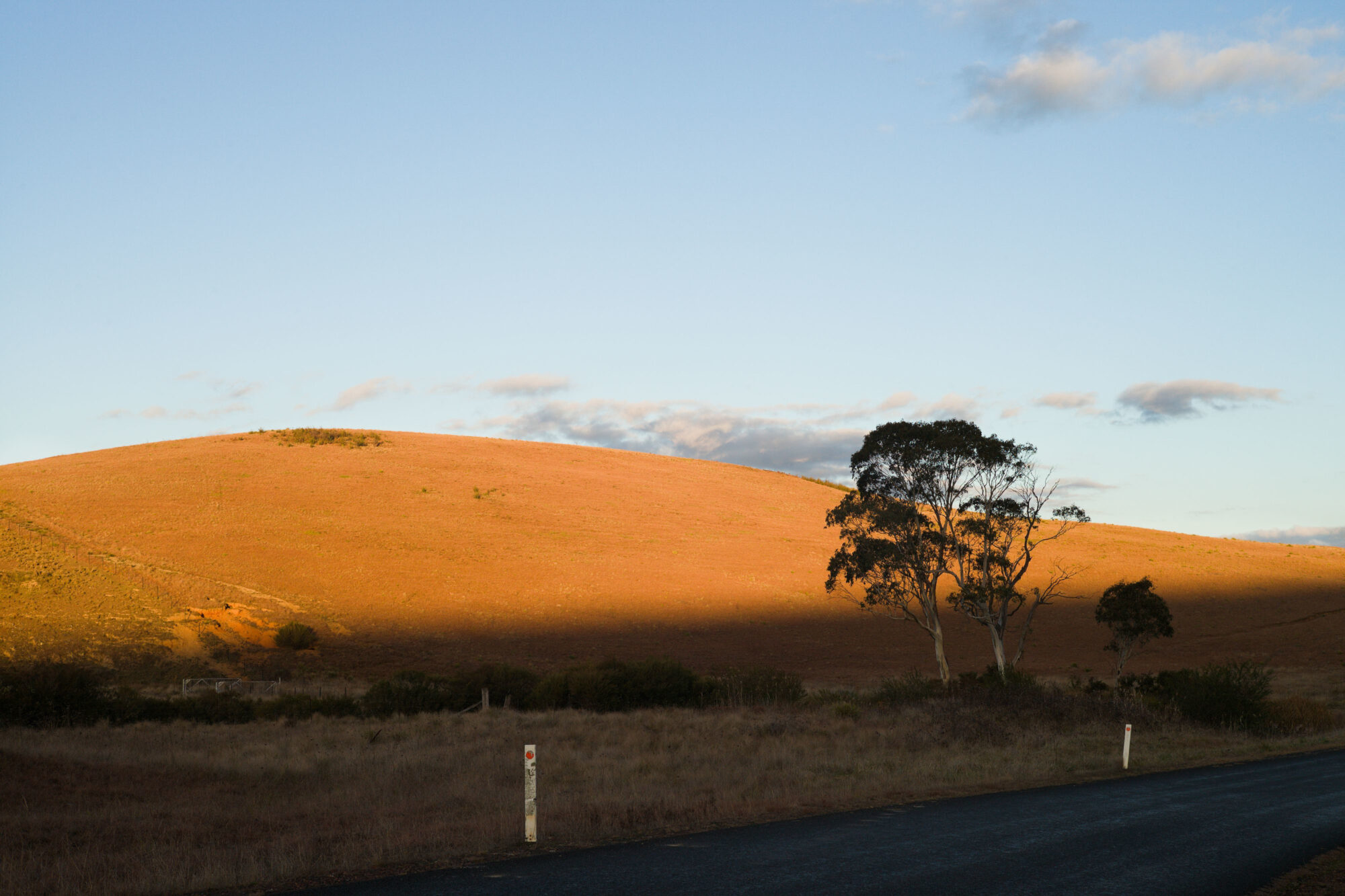
The problem is that genre isn’t merely a description, it also carries expectation. While there are landscapes in this project obviously, capturing unspoiled wilderness under perfect golden sunset isn’t really what I’m trying to do. I’m not an urban photographer either, as while there are towns, streets, buildings and infrastructure in this project, they’re not what most would consider to be urban environments. I don’t really do street photography, and I’m definitely not a wildlife photographer. But I feel like there are so many little touches of all of these (and more) in this project that the pastiche makes a genre of its own. Do we call it documentary photography? That would invoke a different set of standards about observation, truth and representation.
Of course, it has been the folly of many an artmaker to reject labels and the very notion of genre theory and study. That’s a group I am very comfortable among. However, I must acknowledge that this makes marketing this project, or any other work for that matter, very difficult. The conventions can be useful, expecially to give audiences a way into unfamiliar work. They certainly make exhibitions easier to organise, portfolio websites simpler to navigate and social media material becomes considerably more marketable. It’d be really nice to apply an existing, recognisable hashtag and be done with it. A label makes life easier. A category is good for organisation. The selection of a genre is an optimisation, but never one that I’ve been able to make work.
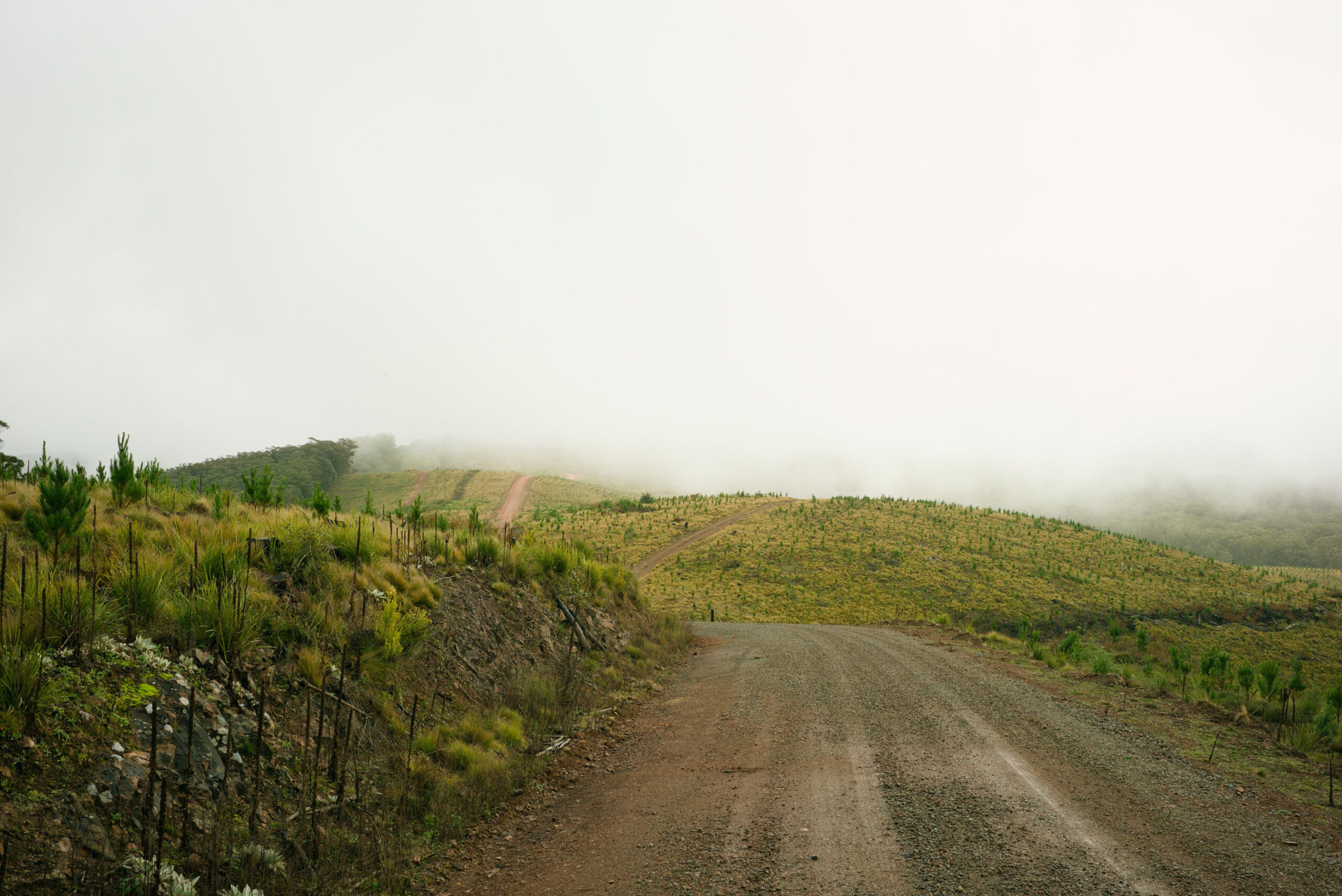
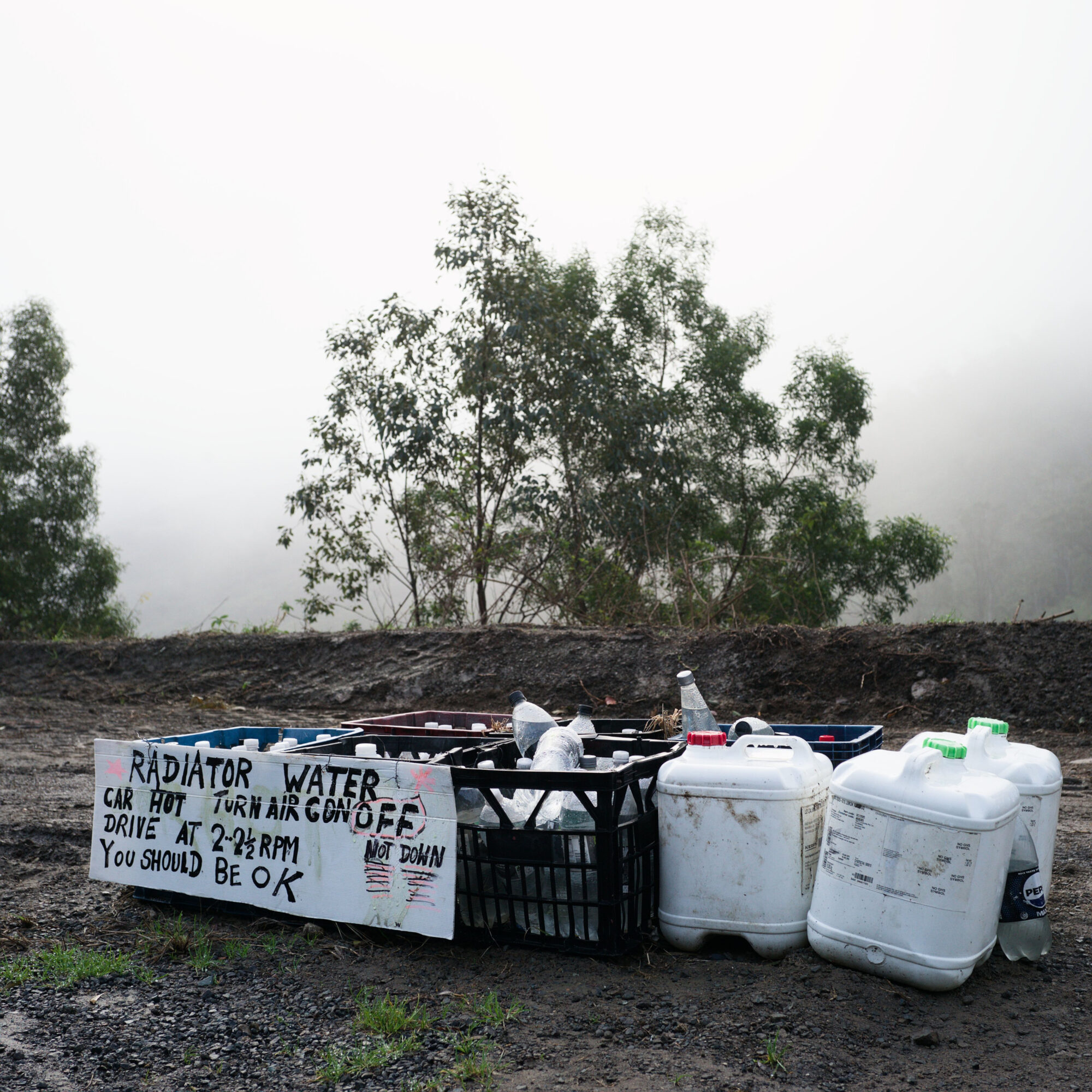
There are creeks and mountains and many trees, cattle and roadside vegetation. There are also houses, bridges, power lines and roadworks. There are several major towns, along with stretches of road where the only evidence of human activity is the road itself. Thunderbolts isn’t about any one of these things individually, rather it hones in on the experience, and the life, along this particular route through rural New South Wales. The road creates connection between subjects that would otherwise belong to entirely different photographic categories.
I saw the images in this zine alongside one another, each an element of the same journey. The coherence comes from outside the subject matter. A journey doesn’t allow you to make everything look like everything else. You don’t drive 300 kilometres through the country and see the same vista the whole way.
This zine gives me (and hopefully you too) something more interesting to look at than a label. A genre might be a useful tool for finding things, describing them and selling them, but it doesn’t really speak too much to what the thing actually is.


Leave a Reply