Unfortunately, this week I am telling you a story about a completely wasted photo trip.
On Monday I set off to visit a few more locations from my “wanted” photo list along the southern end of Thunderbolts Way. I re-acquainted myself with the places I wanted to photograph, but the weather wasn’t quite joining the party. The sun was obscured by just enough cloud cover to be annoying. So I decided to find a spot to park up for the night and hopefully catch some morning sunrise nearby.
Thunderbolts Way is a 300-kilometre scenic drive from Gloucester to Inverell, through New South Wales, Australia, encompassing both expansive vistas and the ordinary infrastructure of modern life.
The Thunderbolts project documents natural beauty and human intervention in coexistence. The photographs preserve record of an environment that continues to evolve with every passing season and change with each new development.
Normally, this is the bit where I tell you about getting up before dawn, finding the perfect composition, and coming home with a whole little self-contained gallery of photographs to share.
Instead, I had a headache.
To expand a little, I had low blood sugar (not really unusual for me) and recovered sufficiently with the assistance of a Percy Pig, but remained so nauseous and light-headed that I seriously considered calling an ambulance for myself. The joy of travelling alone.
My phone also hasn’t worked properly for the last month or two. I’ve had four Google Pixel 7s, all replaced under warranty for various hardware problems, and the current one has lost the ability to connect to any mobile network unless it is also connected to Wi-Fi. It basically functions as a brick, and won’t make or receive calls or texts.
To summarise, I was alone, feeling increasingly unwell, in the middle of nowhere, with a phone that can’t make or receive a phone call. Great.
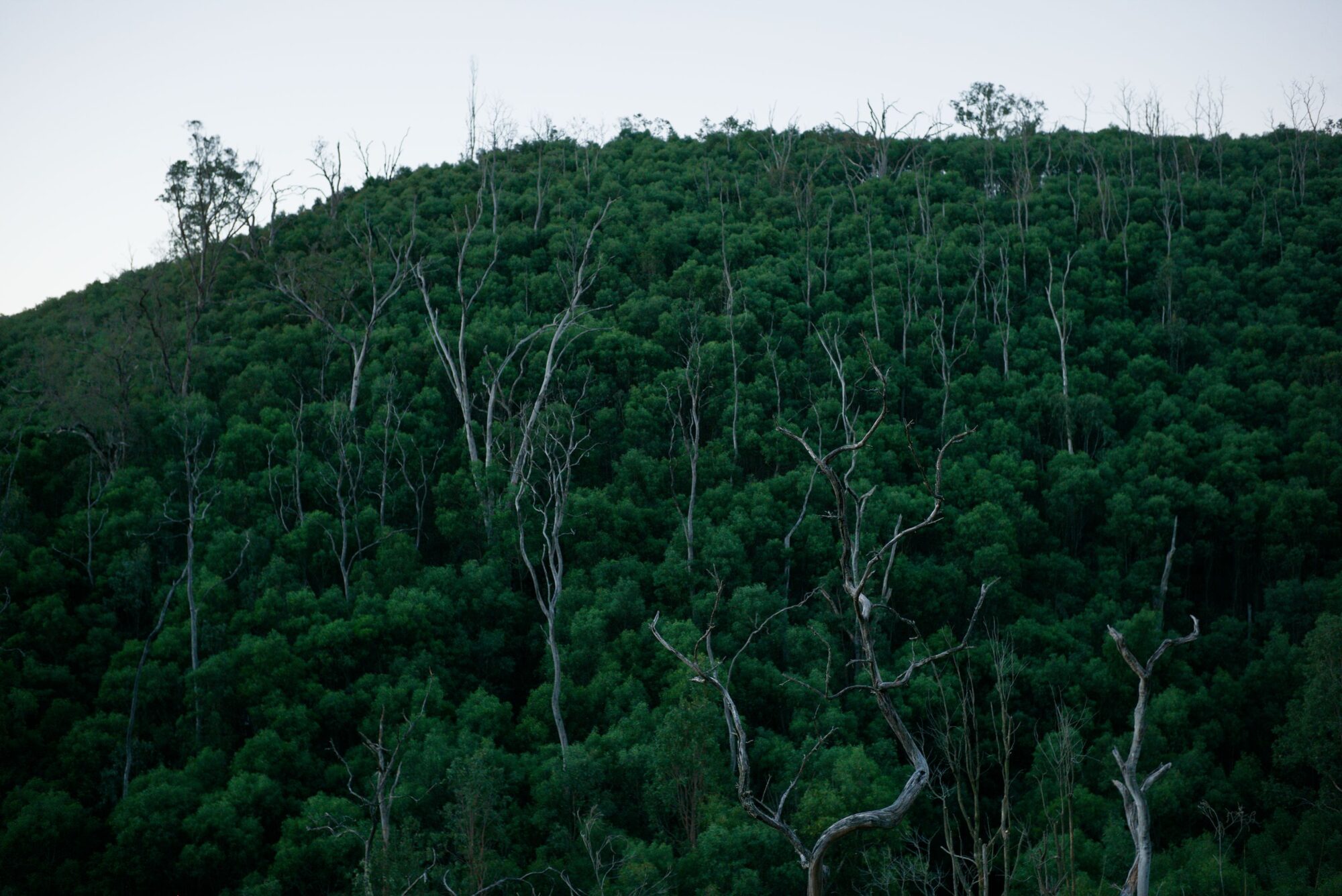
And after all of it, I only really have two photos to share from the entire ordeal.
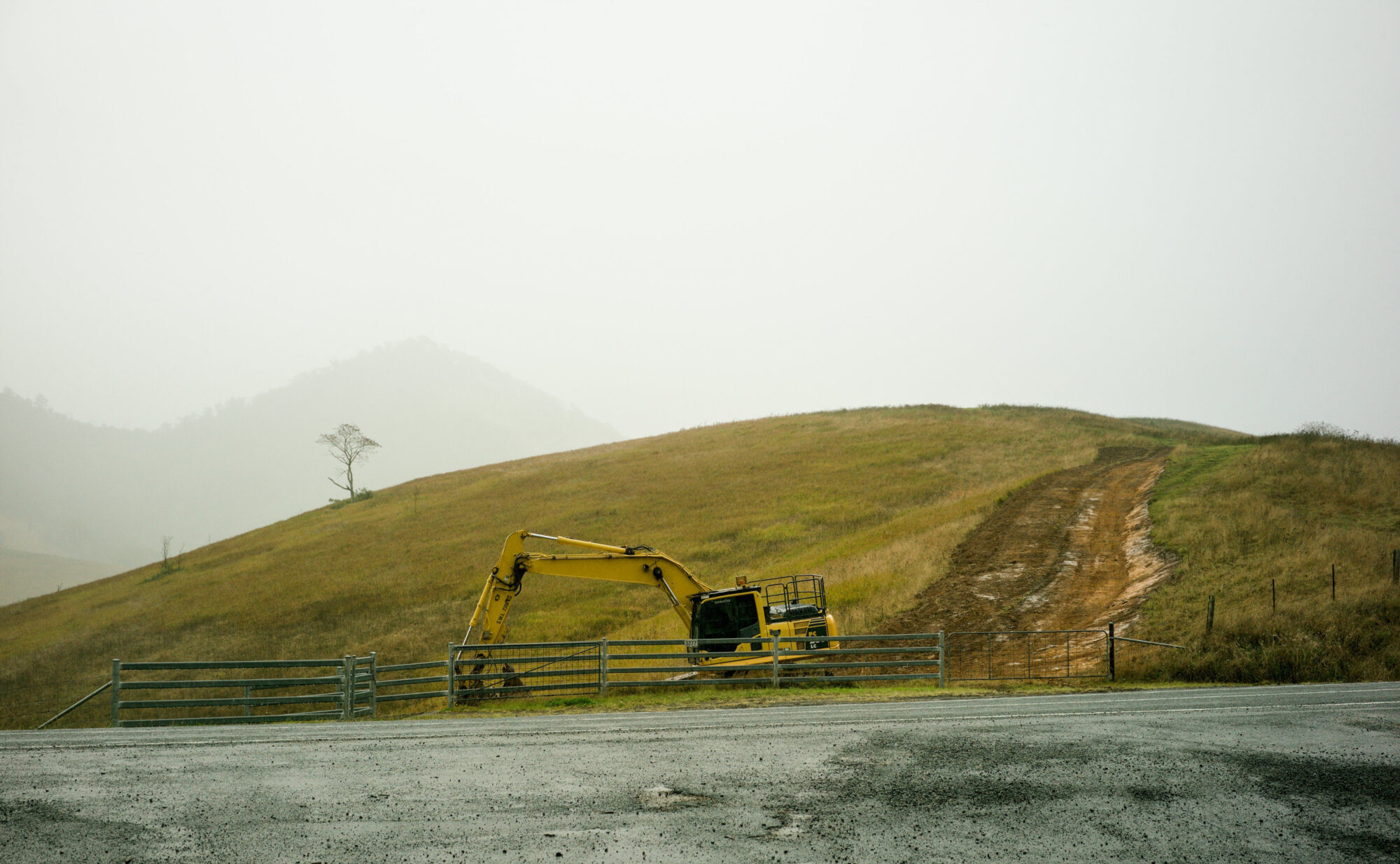
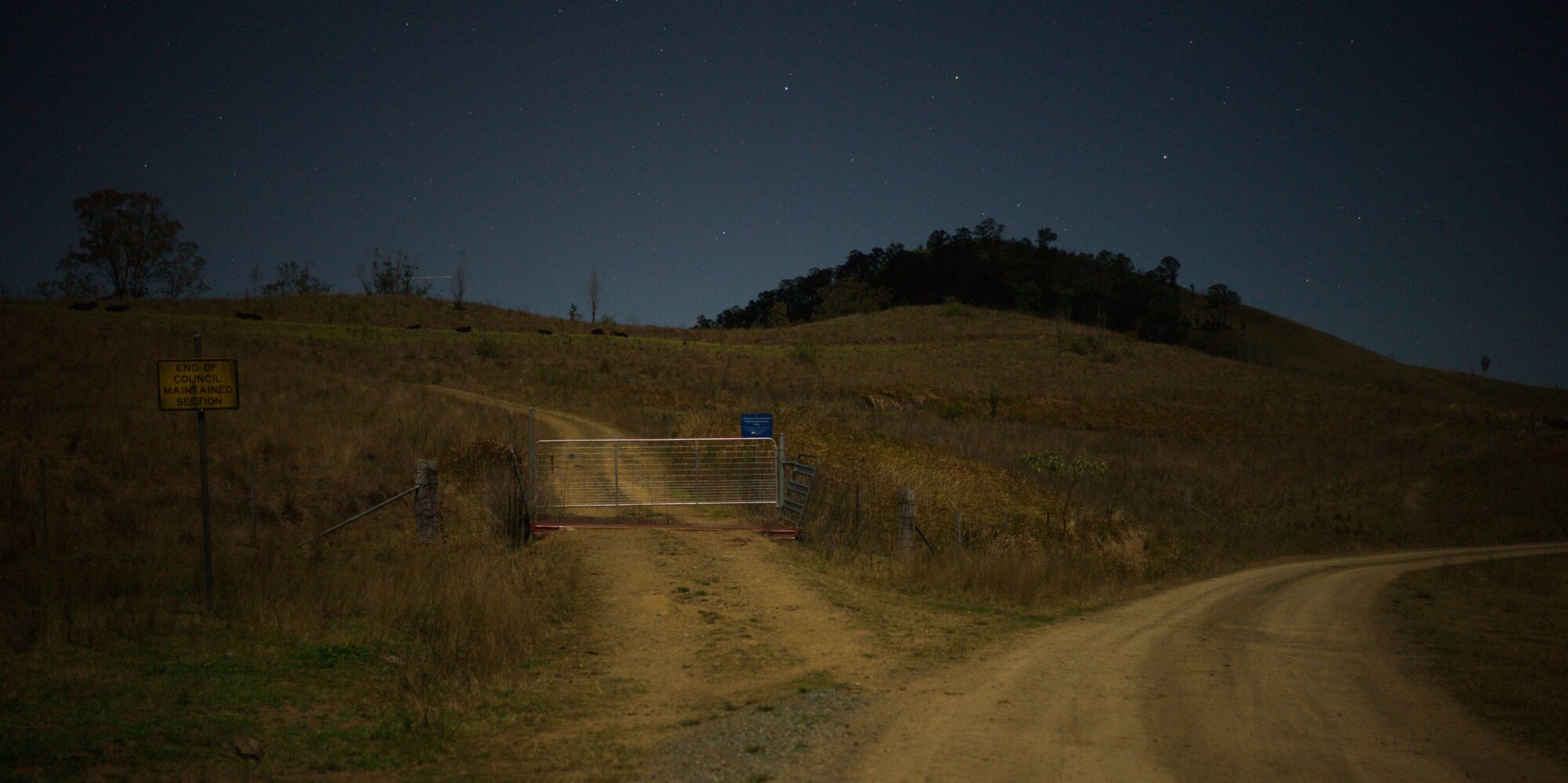
(I’m not even counting this one – this was a “scout shot” for a location that I was hoping to return to in the morning, with some actual light)
Eventually, at nearly 10:30pm, I accepted that I wasn’t going to be able to withstand my condition enough to action the sunrise plan. I made my way out from my camp spot to the main road, down to Gloucester, and eventually home at around 1:30am. By then, of course, I was also bleeding. Is that TMI? Probably.
There is a temptation, when writing about photography, to make every trip sound worthwhile. But this kind of adventure is planned around an extraordinary number of things that aren’t actually under human control. Challenges appear all the time, be it the light, the weather, your access, or your energy and health. Not to mention whether your memory of a location is an accurate one.
On this particular journey, a few things went wrong, but it only took one that I really couldn’t deal with to de-rail the whole project. Two photographs don’t rescue the day, nor justify the twelve hours spent driving, waiting, feeling ill and eventually retreating home. Especially not when diesel costs $2.40 AUD per litre, and I’d travelled just over 400km round trip.
Sometimes you really do go somewhere and get nothing.
So, let’s talk about the photos.
To date, my work on the Thunderbolts project has been exclusively during daylight hours. I’ve done plenty of night photography throughout my life, but this project didn’t really register as part of that practice. Mainly because there isn’t much artificial light available to make night-time photography particularly interesting around these parts. Almost all of Thunderbolts Way is extremely rural, and in some places downright remote.
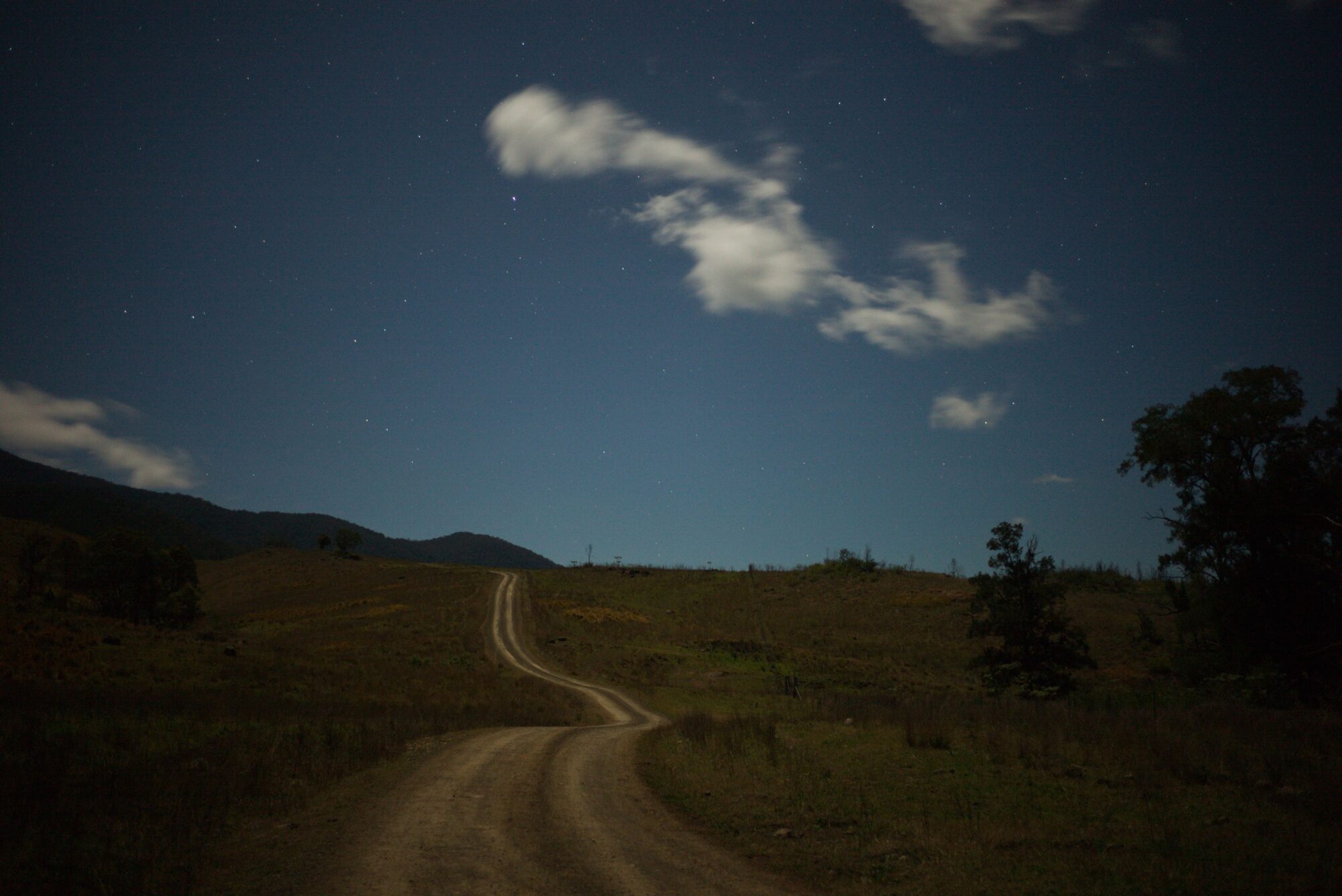
But with that comes a noticeable lack of light pollution. While attempting to walk off the beginnings of my headache, I noticed that the stars, clouds and landscape were all kind of lining up together. It looked like there was just enough happening to make a worthwhile photograph.
So I set up the camera, and an eight-second exposure provided just enough light to pull the landscape out of the darkness.
This image in particular has actually made me rethink my approach to the project.
I’ve been treating Thunderbolts primarily as a documentary project, travelling the route, observing what is there, and trying to make photographs that describe the places and things I encounter. But perhaps I have been putting unnecessary constraints on that.
The project is about the road and the places connected by it. It doesn’t necessarily have to look like a conventional documentary project. It certainly doesn’t have to be restricted to daylight, nor to the frozen action of a fast shutter.
The absence of light might be part of the story. The darkness, the enormous distances and the lack of artificial light are distinct characteristics of this place. That is definitely the more interesting discovery from a trip that otherwise achieved almost nothing.
Two simple photographs have pushed me to do something different with this project. I can approach the subject less conventionally, and experiment with time, light and atmosphere. Rather than getting in the way of a meaningful engagement with place, these departures actually make a true connection possible.
So, perhaps the trip wasn’t quite as utterly pointless as I’d initially declared.
Next time though, I am taking paracetamol with me. No matter how much I hate taking it, and no matter how incompatible it seems to be with my diabetes technology.

Leave a Reply