
Photograph the subject as a character, not an object.
Water always seems like it should be pretty easy camera-fodder. It is everywhere, easily accessible to most. It is beautiful, colourful, textural and kinetic.
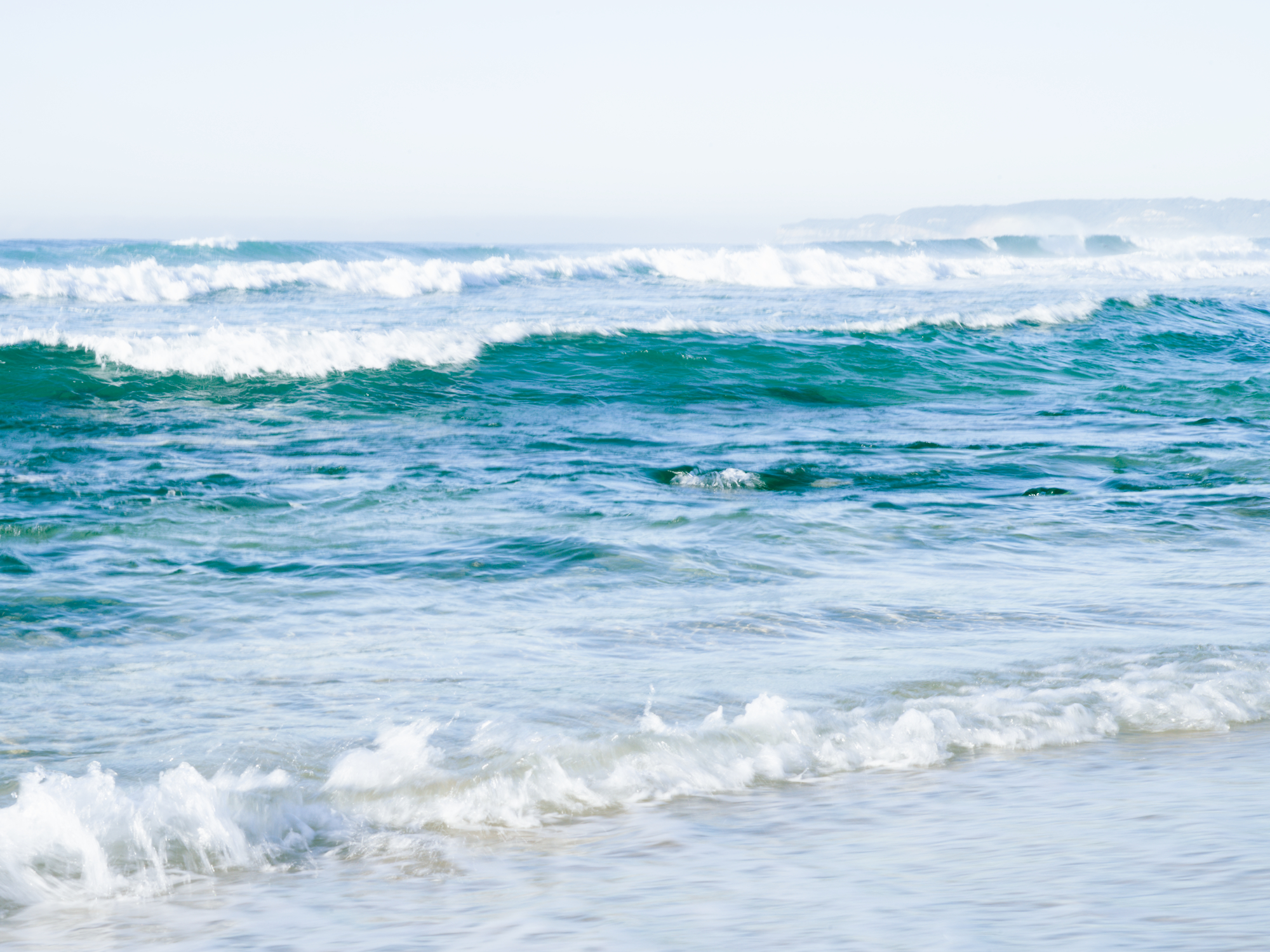
And yet, water is truly one of the most difficult photographic subjects to capture in a meaningful and intentional way. I was reminded of this recently as I set out to photograph the sea, wanting images of only the water. No vistas of headland, beach or coastline, nor action snaps of people lapping up the sunshine as they swim, relax or build sandcastles… just pictures of the water. It is a complex subject, with many varied and constantly changing characteristics, and quite a few challenging behaviours.
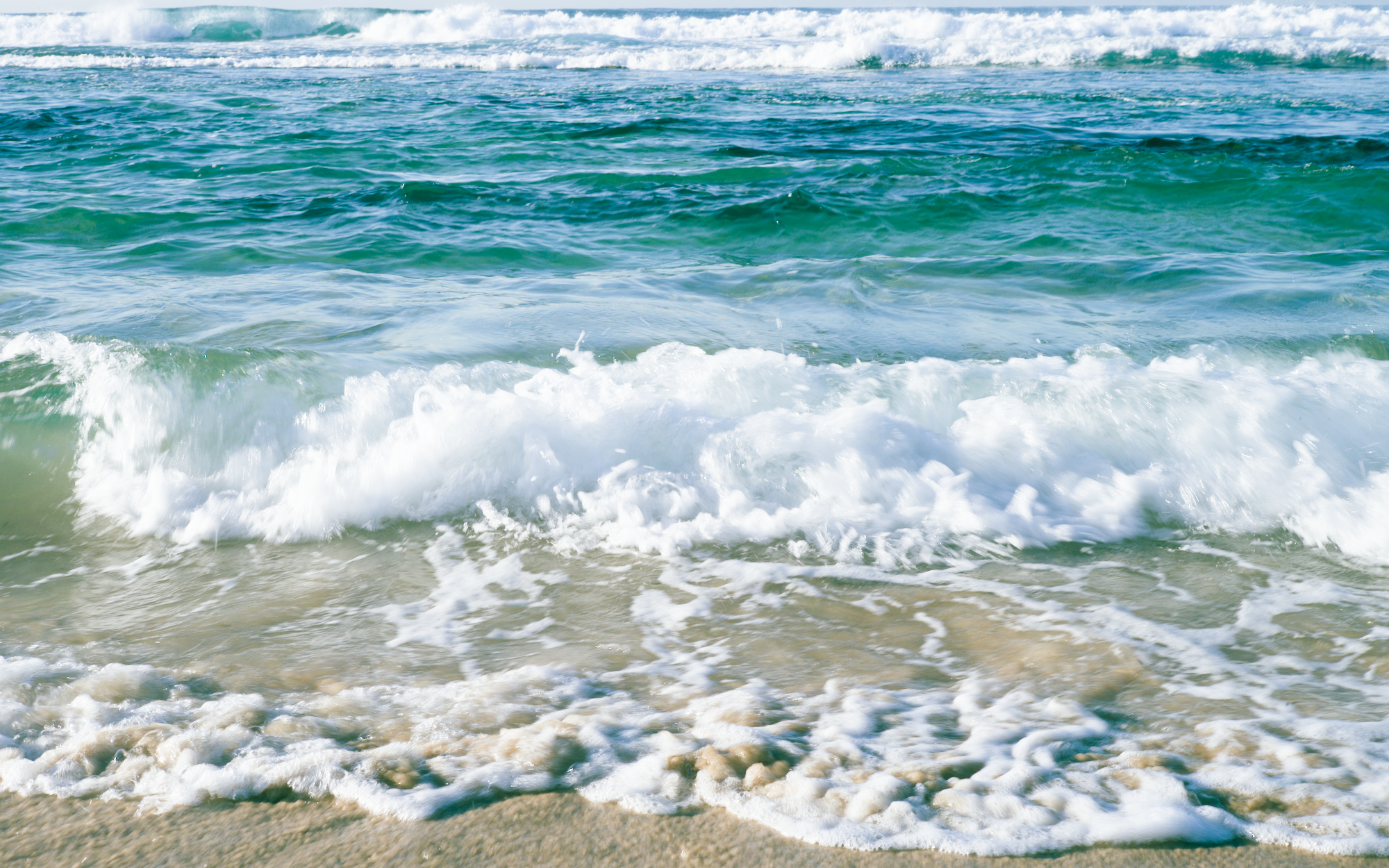
You can’t actually see it
As you stumble through the sand towards the waves, squinting, the regret of not bringing sunglasses is almost overwhelming. I don’t believe there to be any surface as powerfully reflective as a body of water, with the ocean taking this into a league of its own. If you’ve ever held a camera (or even a phone), you’ll know that it’s easier to ride a dolphin sidesaddle than it is to see a screen with a photo preview at the beach. In so many ways, you are blinded by the very subject you are meant to be observing.
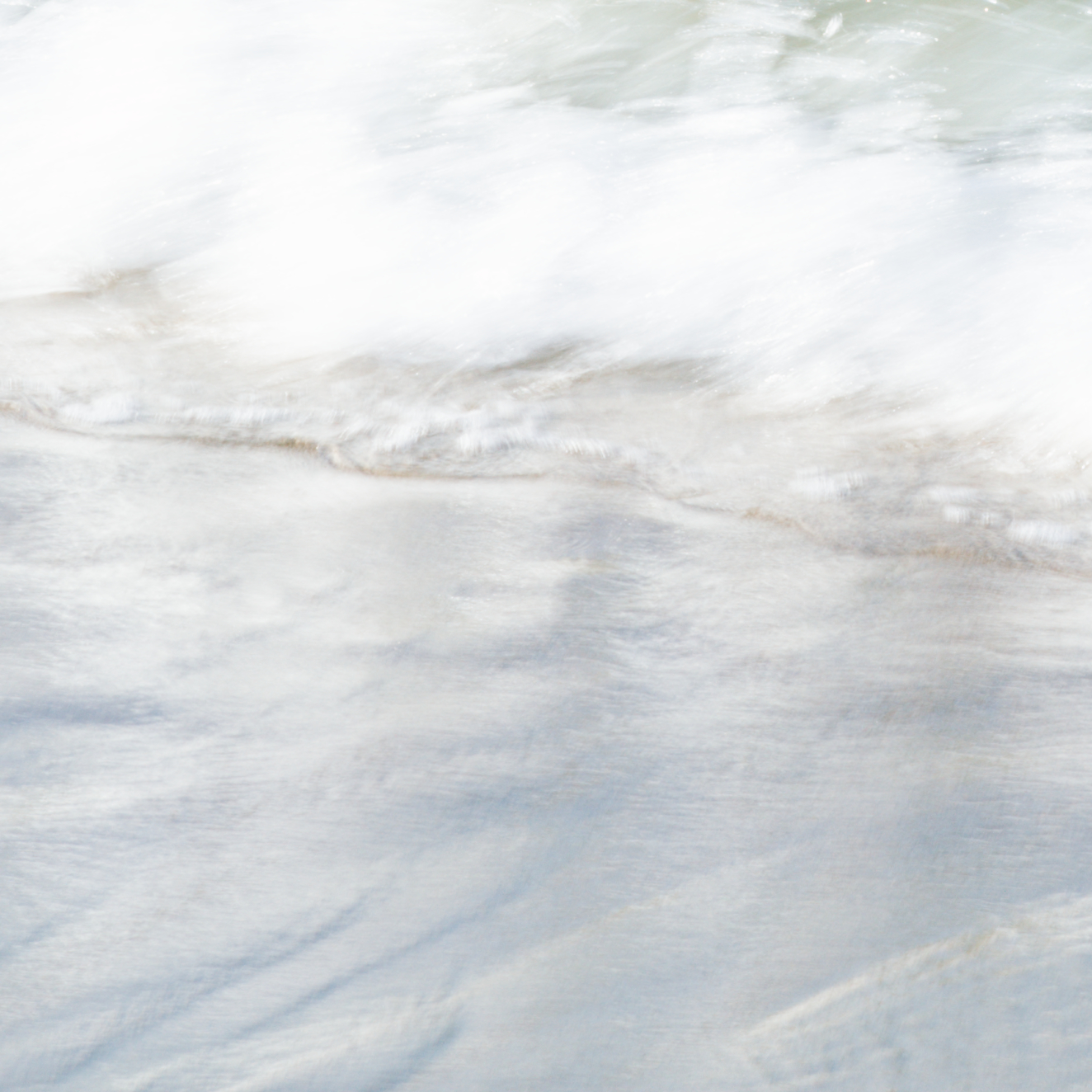
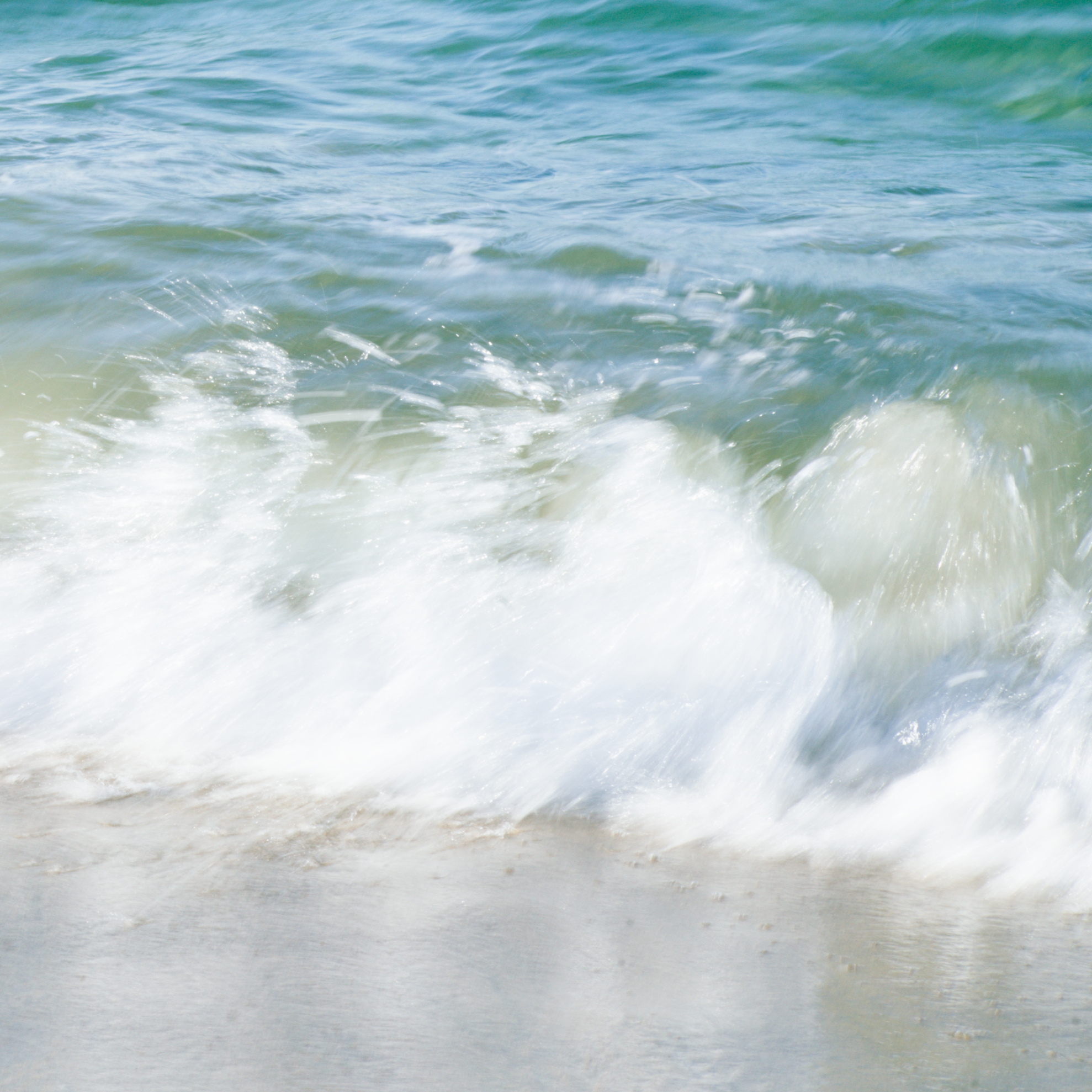
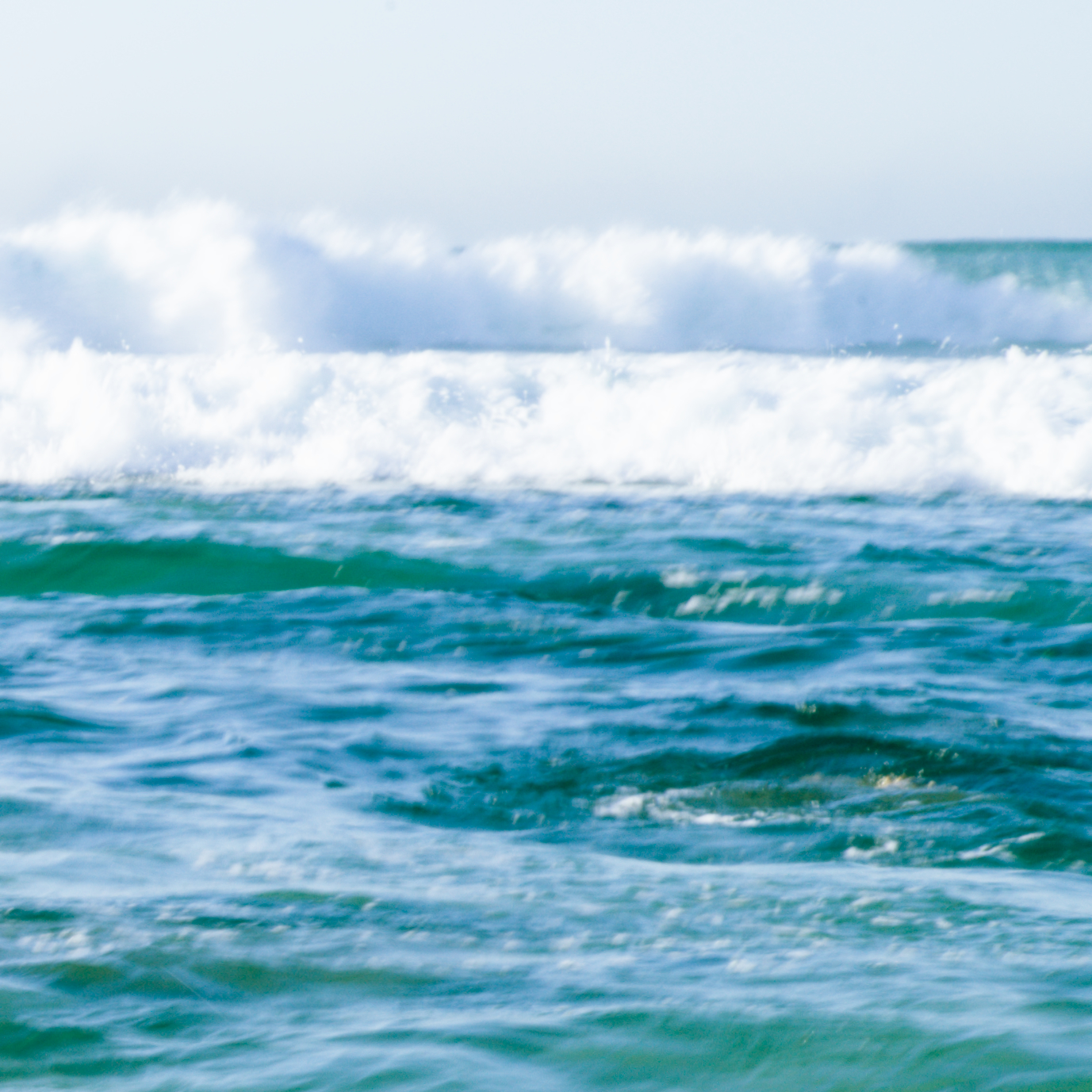
Water easily becomes so bright with reflection that it blows away opportunities to see or make sense of detail. And these reflections bring their own content; sky, sun, cloud, trees, buildings, even yourself, potentially, shown back to you in a way that almost obfuscates the water you’re viewing them in. Sure, a polarising filter can cut through and facilitate a remarkable reveal of the sub-aqua, but sometimes the reflection is the photograph. They are part of what water is, and how we engage with it. The character of the water, if you will.
To add further difficulty, while seemingly a magnet for light and brightness, deep water can also be extraordinarily dark. Large bodies of water in particular can contains an enormous range of brightness within a single frame, with brilliant highlights on the surface and almost-black depths beneath. You’ll need to decide how you’re going to convey this character, because water just made the photographer a portraitist.
You can’t tell where it ends
A problem highlighted in an especially cruel manner when one treks down to the ocean shore with a rangefinder camera. With most subjects, focus can be achieved by observing an edge. Whether marked by line, or a change in colour or texture, there is usually something discernable about what you’re photographing from which you can set focus.
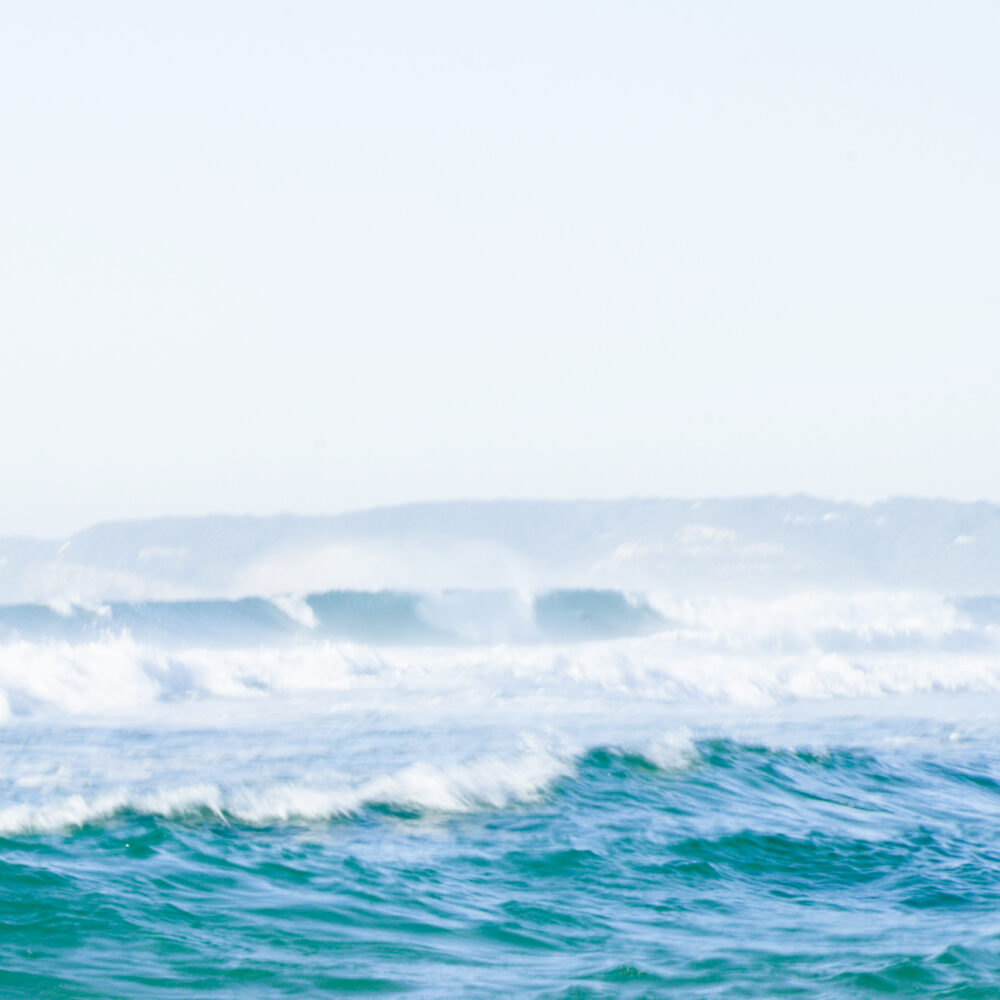
Water offers no such reference. There might be a shoreline, eventually, or maybe even a rock or a boat. But if you don’t want those in your photograph, alongside your water, one is met with a near-endless irregular surface. Water has no consistent shape, and no outline. I’m not sure if modern autofocus systems are any help in these situations as I’ve never actually had an autofocus camera in my hand long enough to do anything meaningful with it, but I suspect even they aren’t able to fully overcome these difficulties reliably every time.
Of course I can see the water through my rangefinder, but it offers only an optical view of the scene – it doesn’t facilitate me actually seeing the photograph. My lens does offer some numerical markings to outline what distance is in focus at which position, but then the water decides that you didn’t actually want a photograph of that remarkable wave shaping up five metres away… hang on, now four… only three… two…
It never stops moving
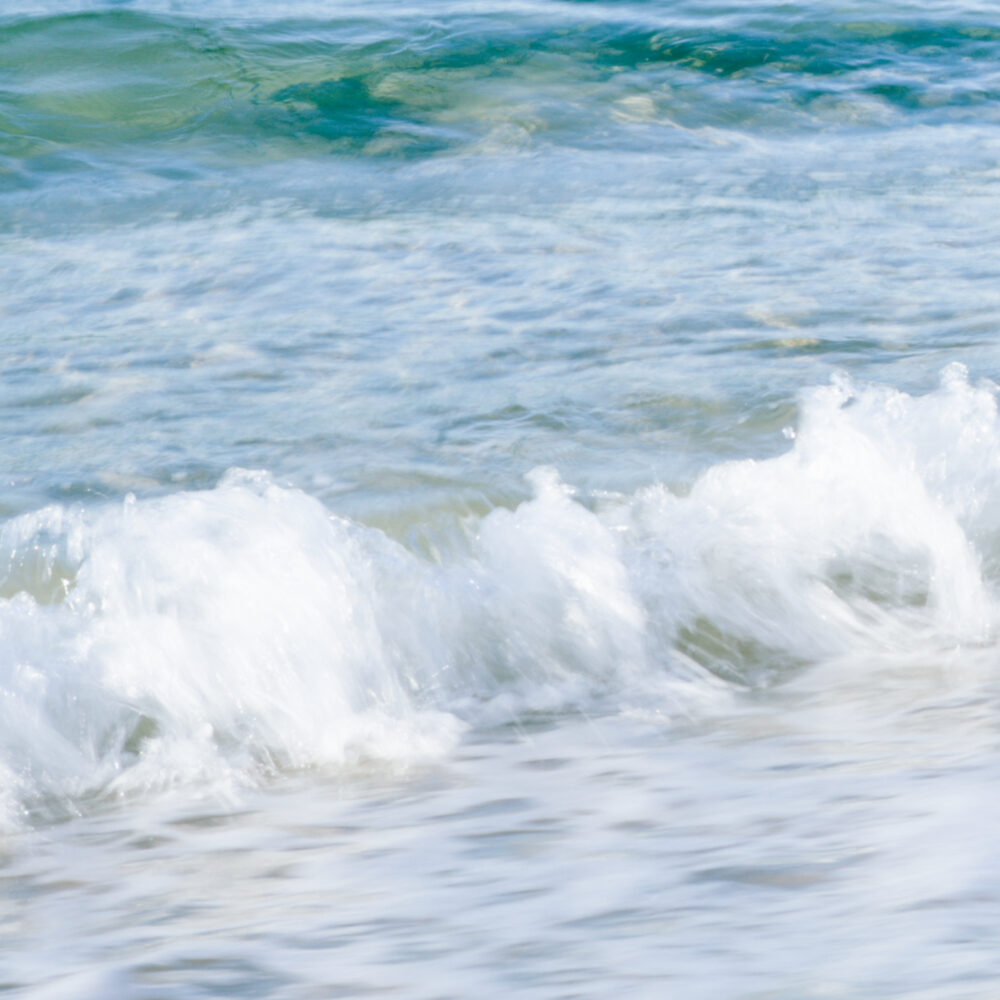
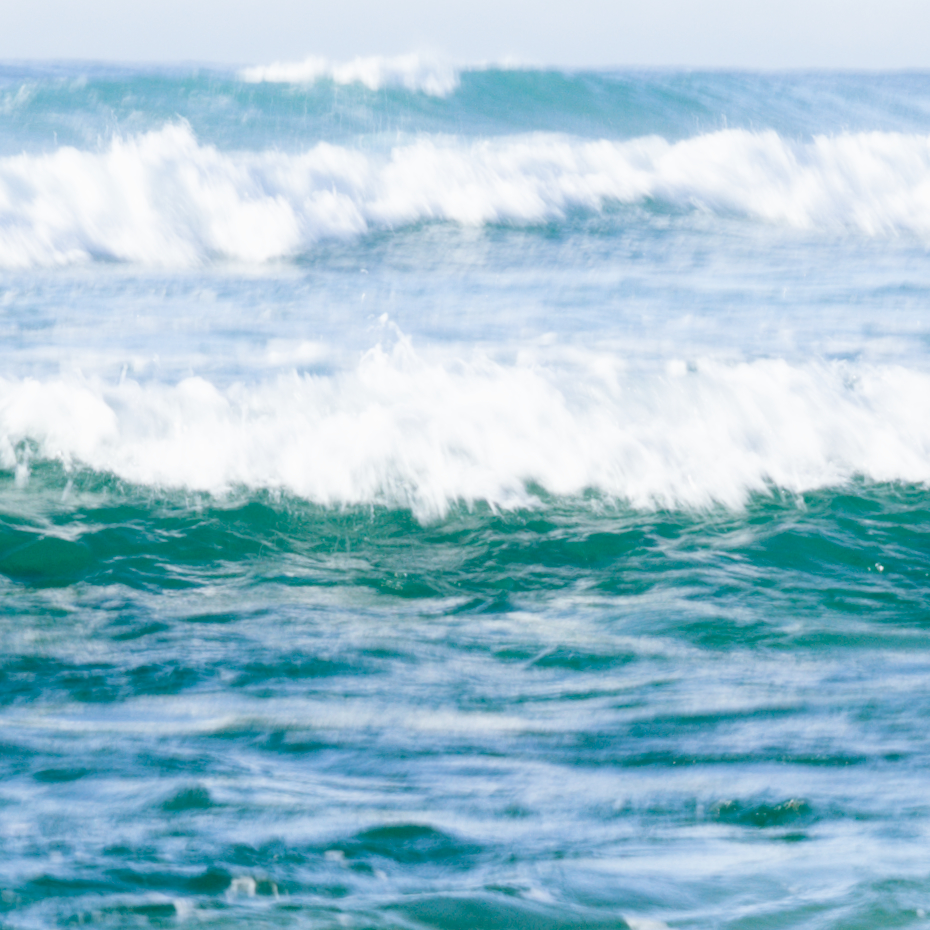
It’s the obvious problem. Water moves. Constantly. Photography, on the other hand, stops things. A fast-shutter snap can freeze a wave, a splash or a droplet. This produces spectacular images, but removes an essential character-element of water; its movement.
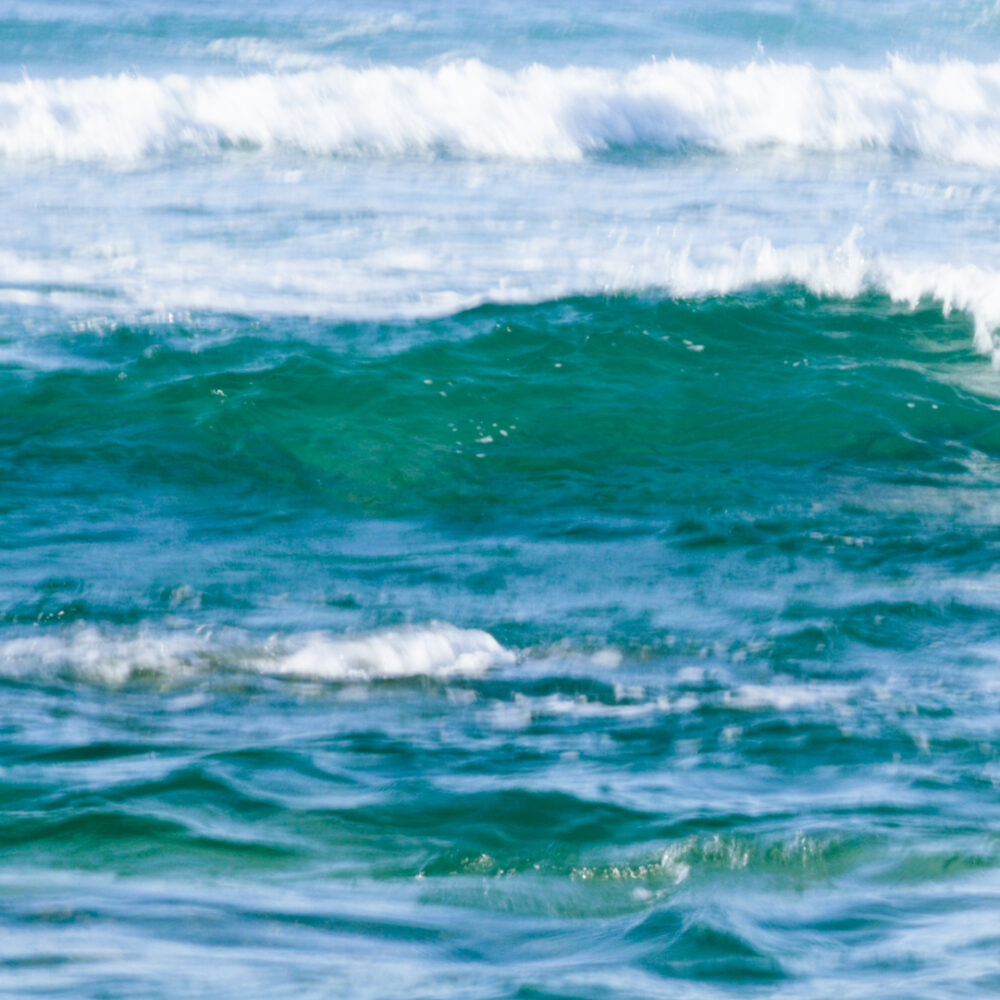
Head too far in the opposite direction however, and you’ll end up capturing so much movement that the water actually appears to have stopped. A long enough exposure can turn water smooth, soft and almost completely static.
Obviously, there is no “correct” shutter speed. The decision to be made is what kind of movement, and which character, you actually want to show. A short exposure makes movement visible by freezing its individual moments, while a moderate exposure may retain direction and turbulence. A long exposure reduces movement to the simplicity of shape and tone. They’re not merely three versions of the same photograph, rather they are different ways of describing the subject. Right now, which character is sitting for your portrait?
It’s never sharp (literally, or photographically)
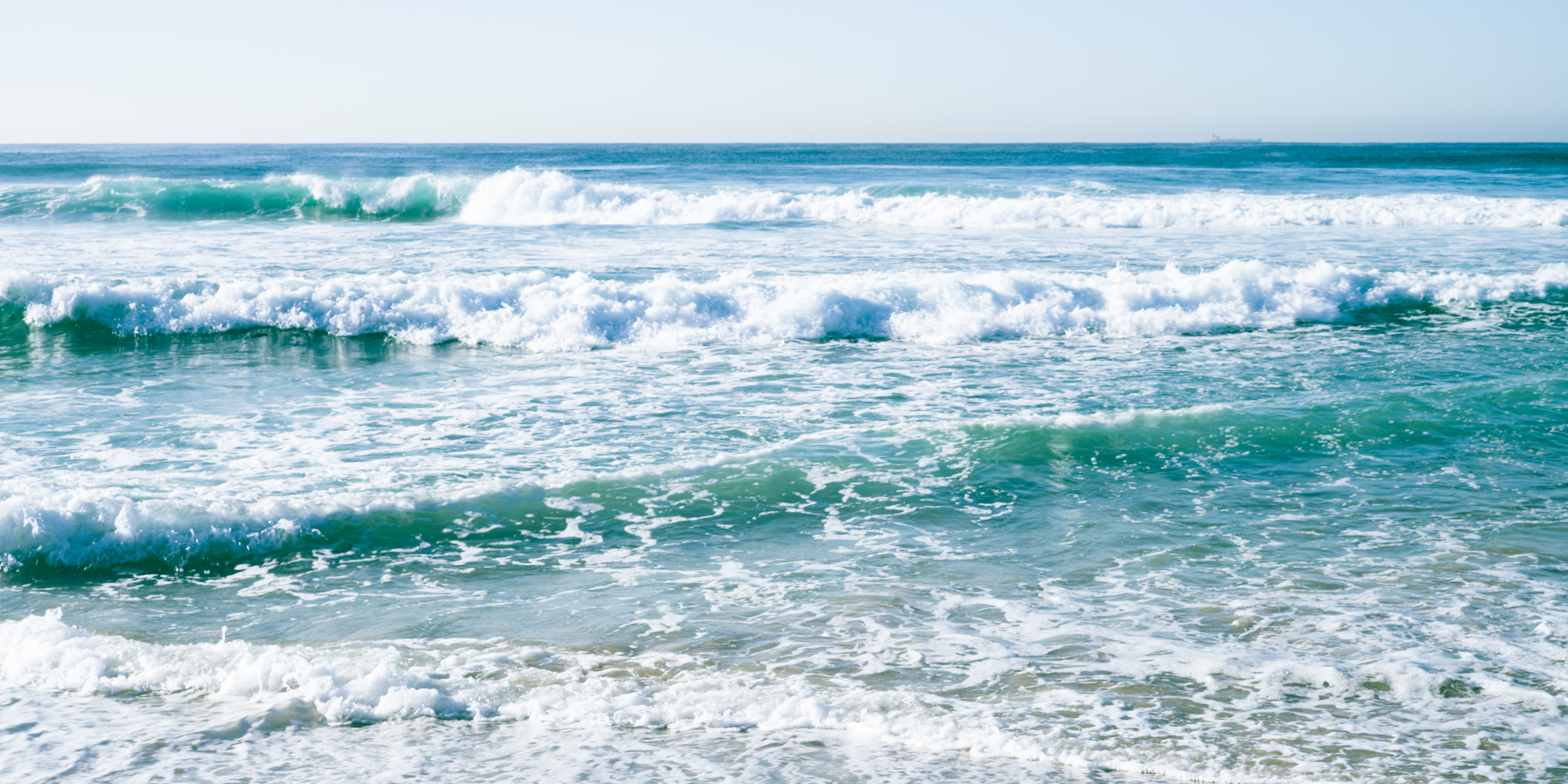
We are accustomed to thinking that a good photograph should have crisp detail. Water, in its perpetual motion, isn’t that.
Even when the camera is perfectly focused, the subject itself is moving. Waves break and the ripples travel outwards, overlapping and changing shape as a way of life. Reflections become distorted, and the transparent surface has mastered the art of concealing its own boundaries. Perhaps the camera missed focus, but maybe there wasn’t anything there to focus on anyway.
This is another reason to stop treating water as an object. You don’t necessarily need to photograph the surface of the water. You can photograph its texture, its movement, its reflection, its interaction with something else, or the pattern it creates. Sharpness becomes much less important when the photograph is about character rather than technical detail.
What colour is it?
This seems elementary, but seriously. Is it blue? Green? Turquoise? Grey? Silver? Brown? Black? The answer is that water is often whatever colour is around it. The sky gives it blue, but vegetation will make it green. An orange sunset sees its colours back like a mirror, but so do the nearly colour-less grey clouds.
There is often a temptation is to make it look spectacular, for example increasing the blues, pushing saturation, and making the turquoise appear somehow more turquoise. But water photographs become almost comically artificial very quickly, and you’re not a cartoonist.
I avoid thinking on what colour water should be, instead opting to analyse what this particular water is doing. Sometimes the answer really is blue, but in the same breath city folk will tell you just how easy it is to have hot pink and neon yellow coming back at you as the lights of nightlife play across the water. Othertimes, the colour really doesn’t matter – enter monochrome.
We’ve seen it all before
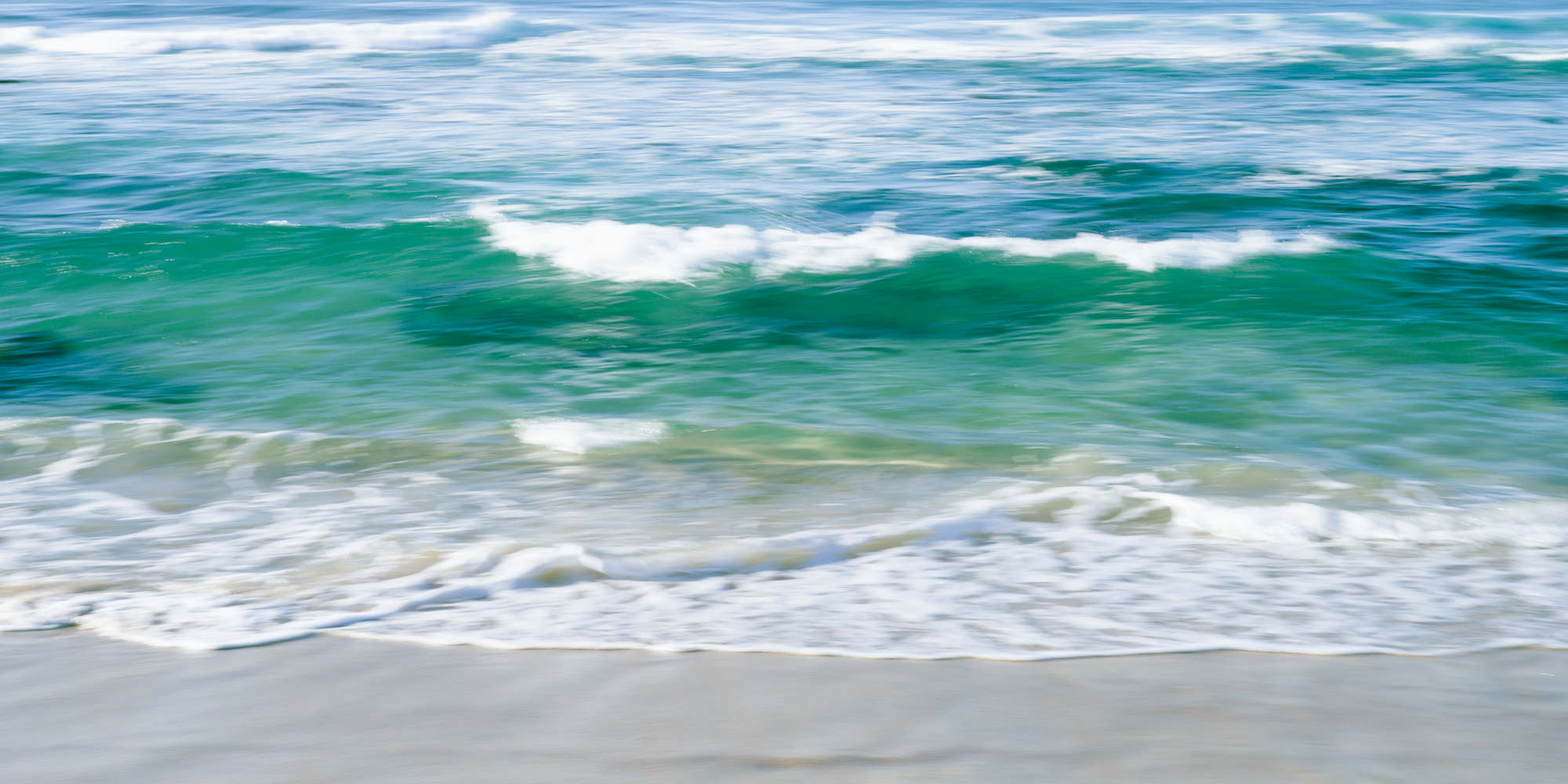
Without doubt the most difficult problem to overcome. Everyone has seen water. There are a billion photographs of beautiful beaches, crashing waves,turquoise ocean, and sunlight glistening across a lake.
It’s all too easy to get wrapped up in feeling that the photograph has to be extraordinary to be worthwhile. The wave has to be enormous, set in front of a sunset that is frankly pushing the boundaries of reality in the behaviour of light. The colours are perfectly tuned and the water has a look to it that nobody has ever seen before. Our lust for the incredible only leads toward the same photographs every time, and that’s not very good portraiture.
Instead, look for what is specific about _this_ water. The way it moves around a particular rock, or the reflection of a building or a vessel. The strange colour produced by this particular combination of weather, depth and vegetation. A tiny interruption in an otherwise repetitive surface.
Subsitute water with something else
One cannot photograph water as though it were a mere object. It is much more interesting as a character, with an identity shaped by traits and behaviours.
Is the water moving? Then choose a shutter speed that describes that movement rather than automatically smoothing it away because that’s what landscape photographers say “looks good”.
Does it reflect? Decide whether the reflection is an obstruction or the subject. You don’t need the polariser. It might be naturally transparent, so look for what can be seen through it – that’s just as much a part of the water as the liquid itself.
Is it dark? Let it be dark. Is it blue? Perhaps. But don’t assume it has to be.
Take the character of the subject – its shape, texture, reflections, colours, movements, or anything else that interests you – and make a portrait. Water is too complicated and varied to be a thing. Photograph it like a being.
Leave a Reply